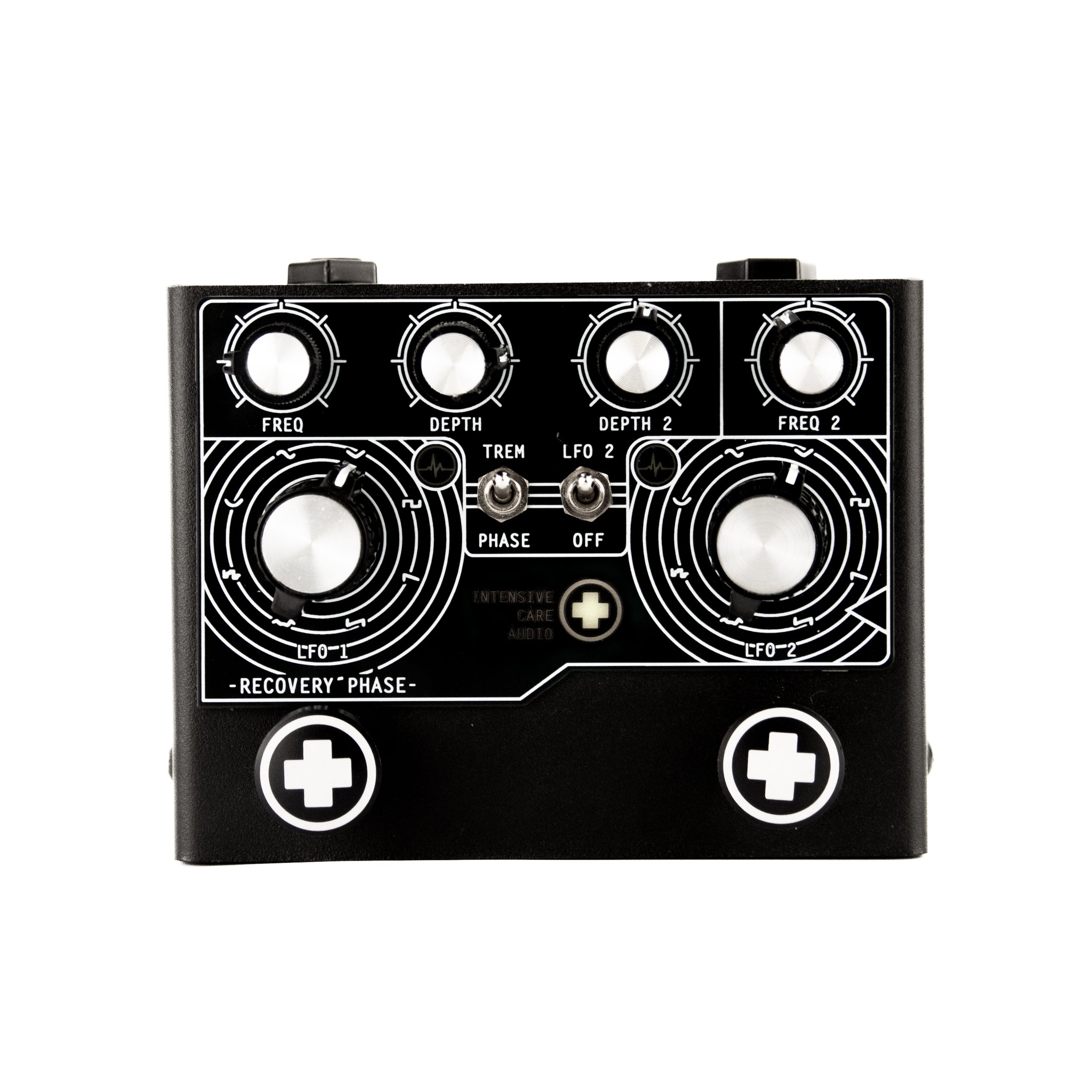
Interview date: 24/02/2021 // @intensivecareaudio //intensivecareaudio.com
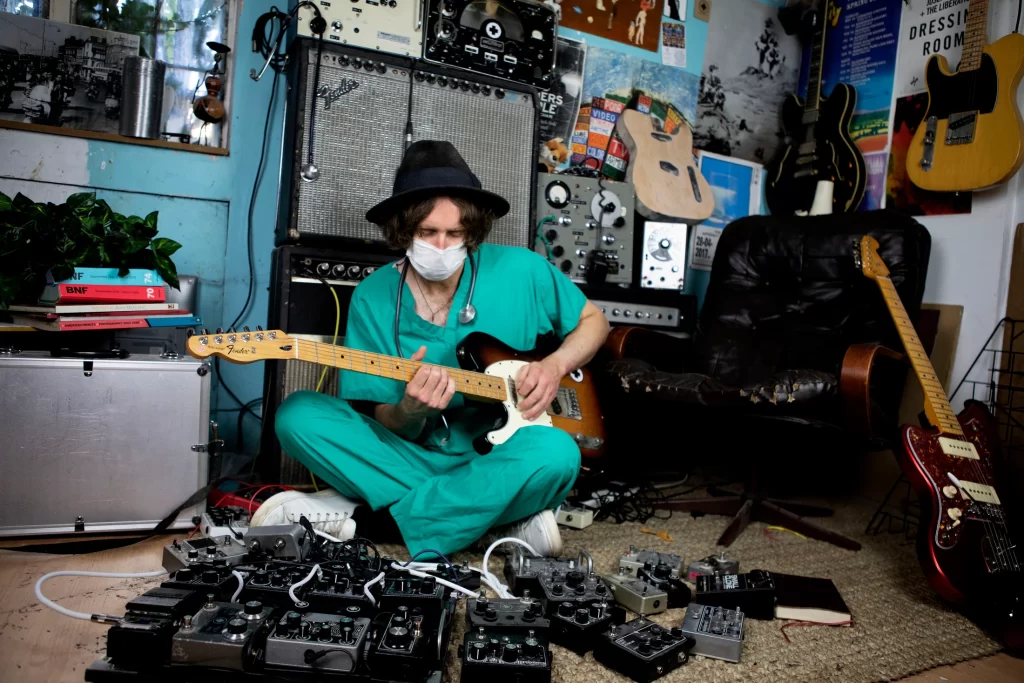
How did Intensive Care Audio begin?
I did European Literature and Contemporary Theory at university, which I really, really enjoyed, but I didn’t know what area of work I wanted to go into, and then playing music meant I just didn’t want to get the kind of job that tied me down to anything. So, I worked in bars for about eight years. Then, a year before last, somebody sent me an email that Rainger Fx was hiring. I was so excited.
I got the job at Rainger, which is great. I worked with them for about half a year, and then the pandemic hit, so I went alone. Everything kind of snowballed so quickly. In the space of just over a year, I’ve gone from working in a bar to starting a company, and it did fairly well. It’s beyond my wildest dreams, really.
I’ve been building circuits since I was 18 or 19; it’s something I taught myself. Over the last eight years, whenever I had a spare day and I wasn’t working at the pub or hungover, I would just get something on the breadboard and play.
I made a couple of pedals for friends, but I was mainly building stuff for myself. I was copying commercially available pedals for a while, or just stuff I wanted, as it all basically started because I couldn’t afford to buy effects pedals.
Once you understand what goes into making something and understand how it works to a certain extent, you suddenly realise you can do it really cheaply yourself. Something that always appealed to me was not really taking something for what it is, as the final finished product, but understanding the component parts that go into it by taking things apart and working out what they do and how they go together.
To start, I think fuzz is the basic kind of go-to because it’s just so easy to get working; it’s two transistors and a couple of resistors. But I got bored of that quite quickly, as I’m not one of those people who obsesses over different fuzzes and the nuances between all these different kinds, which are essentially the same circuit. So, I kind of wanted to move on from that quite quickly and get into strange things.
Fundamentally, it’s all just about wanting to recreate those moments when you’re at gigs, when you hear a guitarist doing something, and you think, ‘what is that?’ How was he doing that? It’s that mystery.
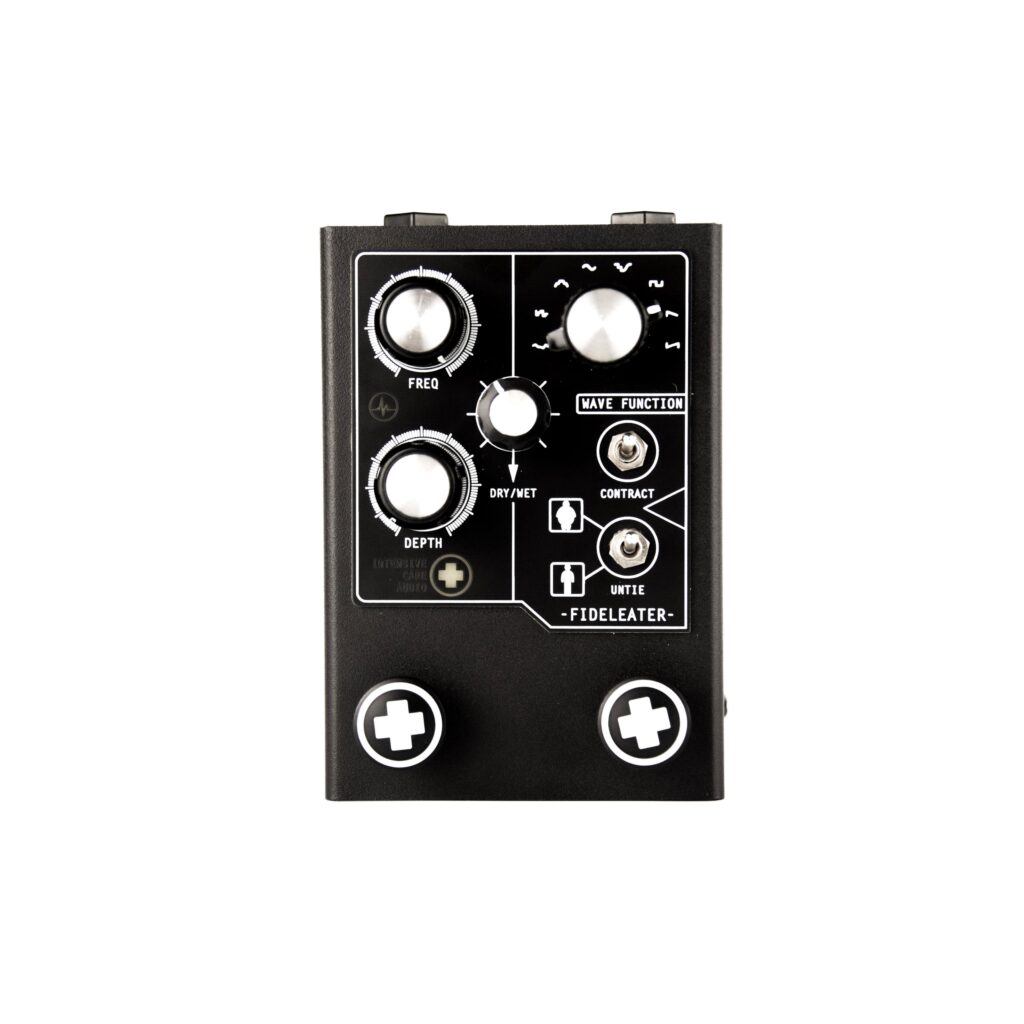
The first pedal was the Fideleater, which is a kind of heavy modulation delay chorus thing. That was just something I was working on for myself for a while. It all came about because somebody asked me to build them a ZVEX Instant Lo-Fi Junkie, and I couldn’t find a schematic for it anywhere online, so I said to him I can do an approximation, I can try to do what I think is going on. Then, as I was messing around with it, I decided to use things such as an LFO, which has eight different waveforms. So rather than just having sine wave modulation, you can have all these different ways to modulate. I called it the Fideleater, and it had a picture of a drawing of a man throwing up all these cables.
But, it changed so much after that, I was messing around with it more and more; it just got to the point where I thought, this is really, really good, I really like this. Then, when the pandemic hit, I thought, well, let’s have a go. That was the first thing I wanted to release for sure because I just felt like it was gonna appeal to people who wanted something a bit weird and strange.
I had quite a big pedalboard of commercial effects, and then I decided I was going to go through them one by one and replace them with stuff built by myself. So, I just sold them all, which I kind of regret now.
You might hear something in your head that you know will sound really good, but if you can’t make that sound, it’s incredibly frustrating. That’s really where the weirdness and the strange mist come into it because, quite often, the sounds in my head are quite strange or weird, and that doesn’t come out of a normal pedal.
Where did the name come from?
I remember years and years ago, talking to a friend and just saying as a joke how it was kind of a dream that one day, if I could build my own stuff and set up my own company, it would be cool to call it something like Intensive Care Audio, because you could name all of the pedals with medical terms. My sister’s a nurse, but that didn’t really have any bearing on it – I can’t remember why that name popped into my head.
It was just a bit of a joke, then when the pandemic hit, all my work with Rainger FX dried up, so I thought maybe I’ll just fulfil my word on and start Intensive Care Audio.
How did you develop the identity and graphic style?
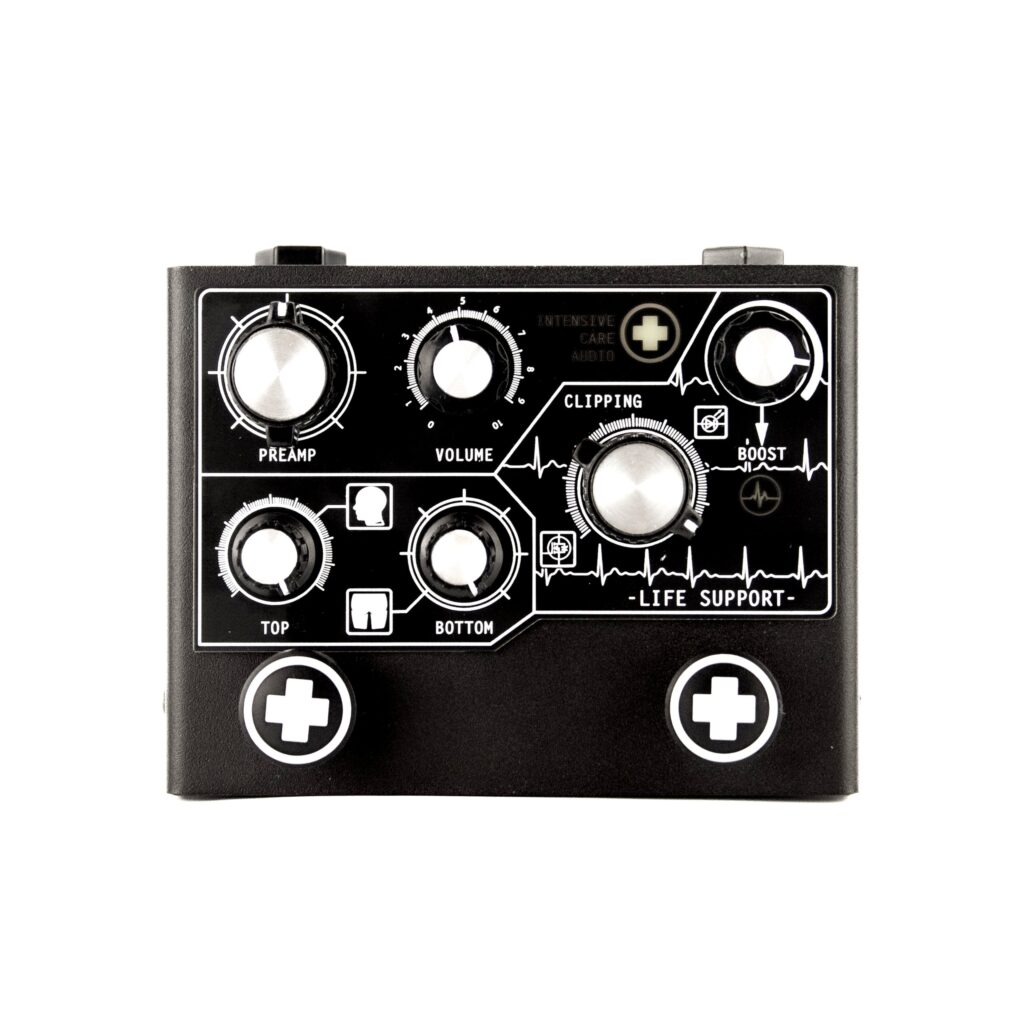
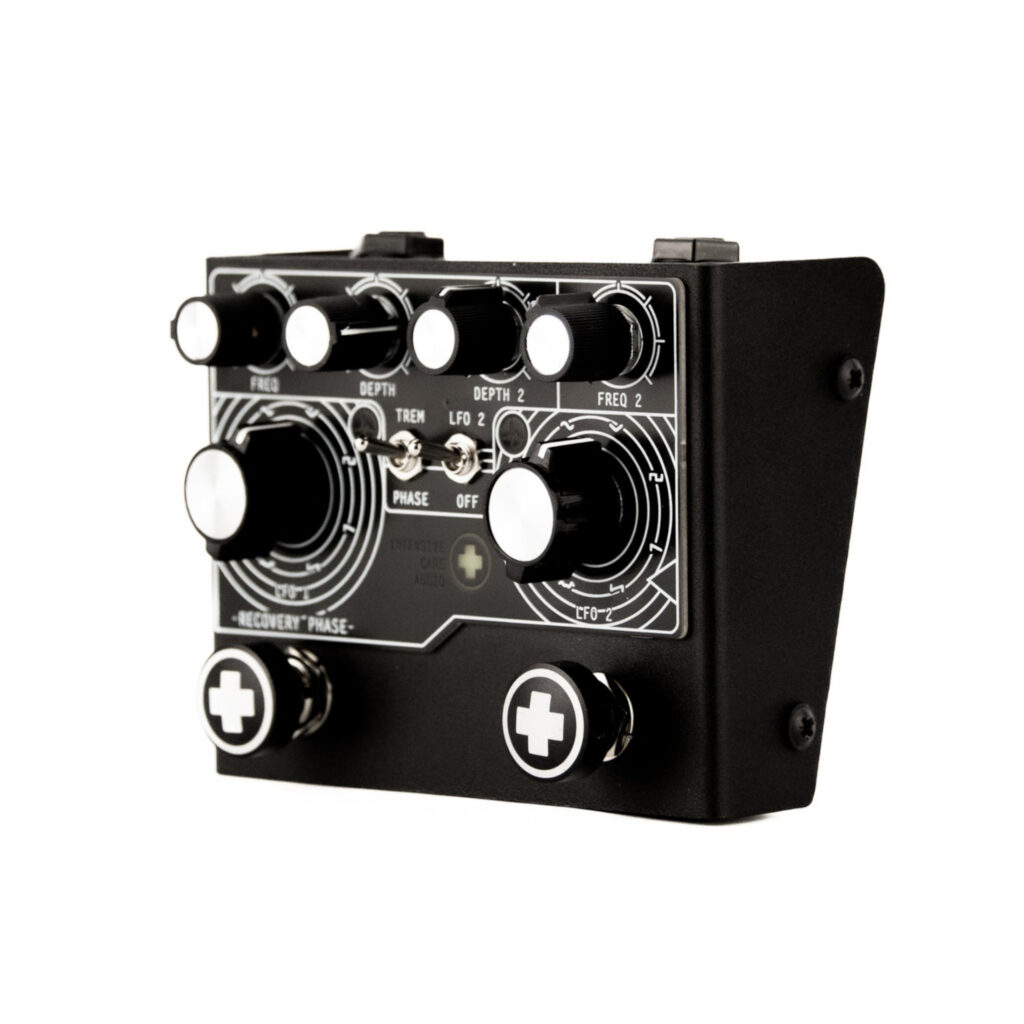
It was just me messing around on my laptop. I’ve never done anything like this before. I just taught myself how to use Illustrator last year, which I really liked because it’s all straight lines, and everything snaps together; there’s not much margin for error.
Originally, I was trying to get a pharmacy logo, and I had to learn how to make it in Illustrator. I did it in black and white. That’s pretty much why everything is just black and white. I just thought it looks cool, so for simplicity’s sake, let’s just keep everything black and white. It will all be a variation on a theme, which makes it a lot easier to build as well.
What were the ideas behind the graphics and illustration?
(With my design) I’m going utilitarian, and there’s no fancy kind of graphics; it’s just a word and an arrow that tells you where this knob is set and what it does – it’s all really matter-of-fact.
It just kind of came out of nowhere because I was just doing this as a hobby for a long time and messing around on (Adobe) Illustrator. I have absolutely no design background whatsoever, but I really love the look of old signal generators with enormous knobs that make big clicky noises; there’s just something really lovely about them. When I first started designing the first pedal, that was something I had in mind, but it’s hard because you’ve got such a small amount of space to work on and cram all the little bits on.
Were there any particular inspirations?
I think Death by Audio were a big one because I just always had a lot of respect for the fact that they never really pandered to what people wanted or what kind of the market might want or need. It’s just a vision of one guy, and they build stuff that he really loves, and then kind of goes, “See if you like it”. I think, as a result, we get really weird kind of mad, noisy, horrible-sounding pedals, and they’ve set a precedent for that. I think they’ve never tried to pander to anyone’s demands. Aesthetically as well, I like the way their stuff was laid out; it almost has that kind of signal generator element to it as well, where it’s not too much graphically; it’s all just about accentuating what the knobs do.
The packaging fits the brand perfectly – what inspired this?
All of the text is based on some medication I found in my girlfriend’s flat; I opened up the packaging came what this medicine is, and what it does, you know, side effects, and I thought, let’s just do that for, of what this pedal is and what it does.
I think the idea itself is slightly inspired by Spiritualized, whose album, ‘Ladies and Gentlemen We Are Floating in Space’, was packaged in a pill packet, and I thought it was brilliant. I really love that album, and I thought, since I’m talking about medical terms, that’s probably a good thing to pilfer from.
Spacemen Three had a kind of slightly medical-themed thing going on. So, I wonder if, subconsciously, it’s all kind of just been seeping in over the years.
How important are aesthetics when it comes to developing and selling guitar pedals?
I feel slightly conflicted about that because I think it’s a good thing that so much thought and design has gone into these things, and that has made some beautiful objects that you can enjoy on an aesthetic level as well as what it sounds like. But I almost think it’s kind of gone the other way now where maybe superseded what’s going on inside. People are quite easily enamoured by a pretty-looking box. Maybe people don’t care so much about what’s going on inside. And maybe that’s fine. But I guess I really care about what’s going on inside. It’s a little frustrating sometimes that people can be drawn to shiny, pretty things that have been repackaged by somebody else. So, I try not to be too bitter about it because I know I’m bitter about so much already!
How did Intensive Care find its audience?
I’ve definitely found my niche; I think it’s the doom-mongers and the weirdos, which is great because they are my favourite people. Maybe it is starting to play on my mind a little bit, and it’s not really something I care about, but I know for a fact that the first few pedals are instantly going to alienate a lot of people. I wonder if that played a bit on my mind when I decided the next thing to do was this distortion, which is probably a lot more appealing to a lot more people.