Interview date: 18/10/2024 // @buzzingbugsfx // buzzingbugsfx.com
How did Buzzing Bugs begin?
It’s never been a planned-out and plotted career trajectory. It just kind of happened.
I studied record production at university. A lot of my university course was based in recording studios, so it stemmed from there. I always thought I wanted to be a recording engineer, and then going to university kind of actually put me off doing that, but I still had the experience and the knowledge. I just started at this company as a low-level stockroom person and learned on the job. There was no formal training, which I think is probably the case with a lot of live engineering. There are courses for audio engineering and live production, and there are loads and loads of resources, but I think a lot of people get their knowledge from the experience of doing it and working their way up from being stagehands.
Working with people who were 10 years older than me, who had done exactly the same job, quite a lot of information was passed down, and I was learning from them.
We had quite a high turnover of staff as well, so you’d be working with different people all the time, and everybody comes with their own skill set and their own experience and their own knowledge.
I started building pedal kits about six or seven years ago; before that, I worked for an audio engineering company. We designed large venue sound systems for theatres, restaurants, and community centres. I was always working on bigger picture stuff, rather than the minutiae of a circuit. It was more about using protocols to get equipment to talk to each other and that sort of thing.
I’d been working there for seven or eight years when a new person started in the installations department, and he had an understanding of electronics. Previously, if we had a faulty amplifier or something, we weren’t in a position to repair things ourselves, so we’d subcontract that out. He came from an electronics background, so he looked at any issues with faulty equipment.
Nine times out of ten, it’s a minor component that can be easily replaced. In the case of an amplifier part, a lot of the time you can see the fault visually without having to do anything electronically. He taught me a lot, like how you test things on a board with a multimeter. So once again, it came from that knowledge being passed from person to person. That sparked my interest in circuit-level design.
It was only when I got more interested in the component-level element of looking at how circuits work that I started to realise that the signal routing that I was working with in designing sound systems, a lot of it translates to pedal level.
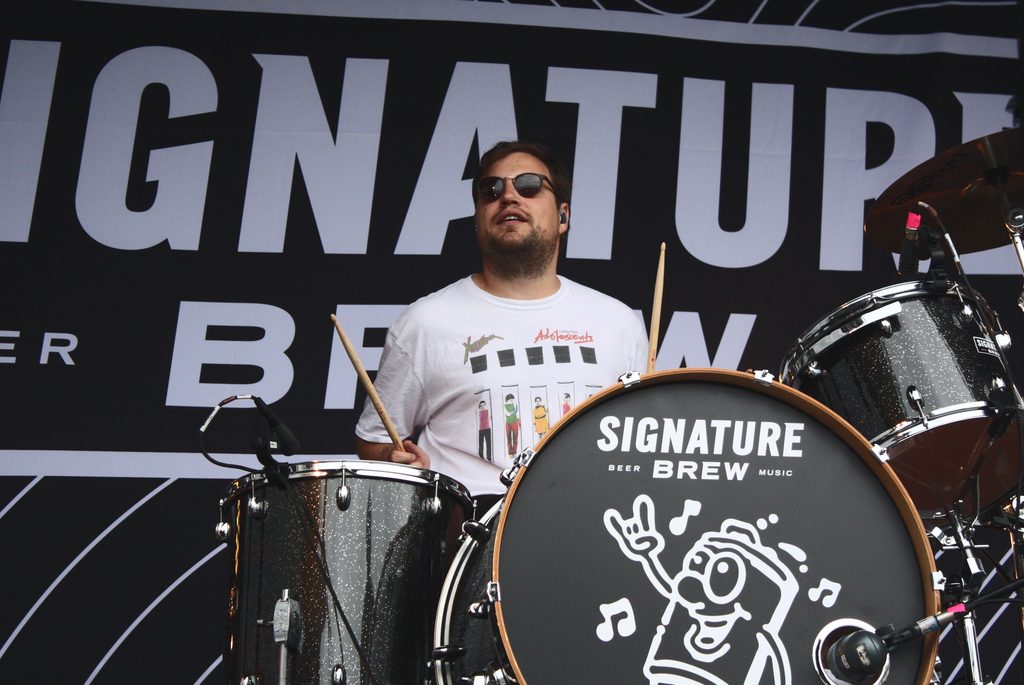
Primarily, I’m a drummer rather than a guitarist. I’ve always played drums in bands. I think I’ve played guitar one or two gigs in my life, and that was when I was a teenager. That’s something I constantly try to change, but real life gets in the way of starting new music stuff.
I’ve always found drum gear to be quite dull. Drums sound good, or they don’t, and there’s only so many drum kits that you can get excited by, whereas, with guitar and noise making, it’s a lot more open. That’s what led me to start building kits and playing around at home. When I started building those kits, I was realising that a lot of this already makes sense to me because of my professional background. I was making kits for people, and then the lockdown happened, that’s when it really started picking up. I started creating my own circuits, going a bit more in-depth and learning how to prototype, breadboard, build, and get circuit boards manufactured.
So, I imagine, probably quite similar to a lot of people, lockdown spurred me to focus on pedal building more. I started to design my own circuits and did small runs for other people, I did a run of pedals for a record label called Alcopop! They put out a lot of records for smaller UK indie bands, and I did a merchandising tie-in for them. Then, I did a run of fuzz pedals for my band when we released an album in 2021. We did 20 units, and I thought they’d sell over six months, but they sold out over a weekend, that was when I thought there’s something here.
In 2022, my wife and I moved from London to Cornwall because we wanted our daughter to grow up outside of London. I was still working remotely for the sound system company at this point, but I had a lot more spare time, because I wasn’t commuting to work. I used to do a 75-mile round trip every day, and that was only if I was going to the office, but we would work all over the country.
I decided to register the company name and go for it. It just started fairly organically that way, I don’t really know what I’m doing, but I’m learning along the way.
I don’t have formal training in electronics. So, I don’t know that what I’m doing is necessarily best practice, but a lot of what I design is vibe-based, in that I’m not necessarily looking for things to perform in the expected way. Someone with a highly trained electronics background might look at some of my schematics and think there’s a better way to do it. The industry is led by people looking at new ways of doing things. If you’re looking at analogue pedals, the reality is that there are probably 40 or 50 circuits that most things are based on. It’s when people look at those circuits and play around with them that’s when things become more interesting.
How did you go about creating the brand?
The first batch that I did for the record label didn’t have any branding at all. They had the label’s logo on them because, at that time, I wasn’t really looking to grow this as a business. But it was when I did the batch of my band that I thought I should probably do this properly. So, I registered a limited company and employed a graphic designer to create the logo and other things like that.
A lot of the branding elements I’ve done on the fly. The branding has changed a lot as I’ve gone because I’ve been trying new things. I’ve never had a set look until I released the first two fuzz pedals; that was when I said this is how I want things to look. In terms of having a brand, it’s not been planned very well in advance; it’s all been quite organic. Maybe one day, I’ll get there and decide that I’m happy with something.
The name ‘Buzzing Bugs Audio’ is a lyric from a band called Cap’n Jazz. They were one of the first non-commercial punk bands that I got into when I was a teenager. I think about 16 or 17. I discovered American Football, and then I did a deep dive. The members of Cap’n Jazz went on to be in a million other bands, and I was completely obsessed with their family tree.
It’s a lyric from one of their songs called “Oh Messy Life”; I was using Buzzing Bugs as usernames for message boards, and it was my Twitter handle and Instagram handle for ages. Really, there’s nothing more to it than that. I think the buzzing element is quite fitting.
As the pedal market grows, what do you think is the importance of brands and differentiation between brands?
A lot of pedals are based on existing things, but if they’re branded well and they look cool, then they’re going to sell.
If you look at the 1981 Inventions drive pedal, that’s, it’s a really good-sounding drive pedal, but it’s essentially not much different from a Tube Screamer, Blues Breaker, or a Rat. If you look at the schematic, then they’re all very similar because all drive pedals are largely quite similar. But that is something that just looks really cool, and he’s got such a distinctive brand that it’s immediately recognisable.
JHS is another one. A lot of what they do is like reviving old circuits, and because of their branding, the artwork that ties across all of their pedals, you immediately recognise it as one of theirs.
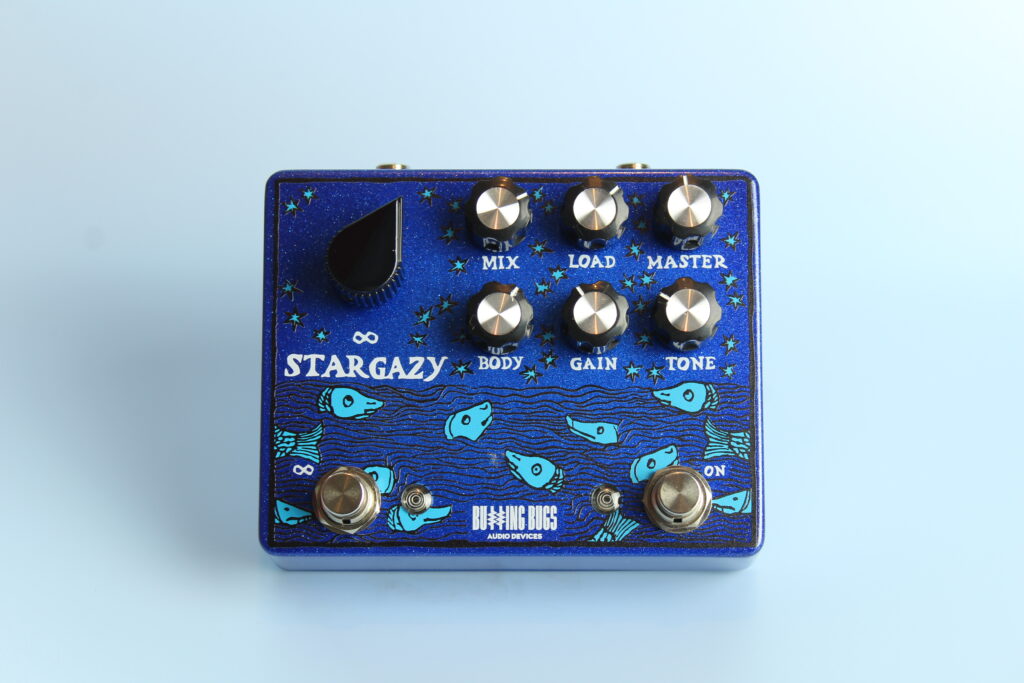
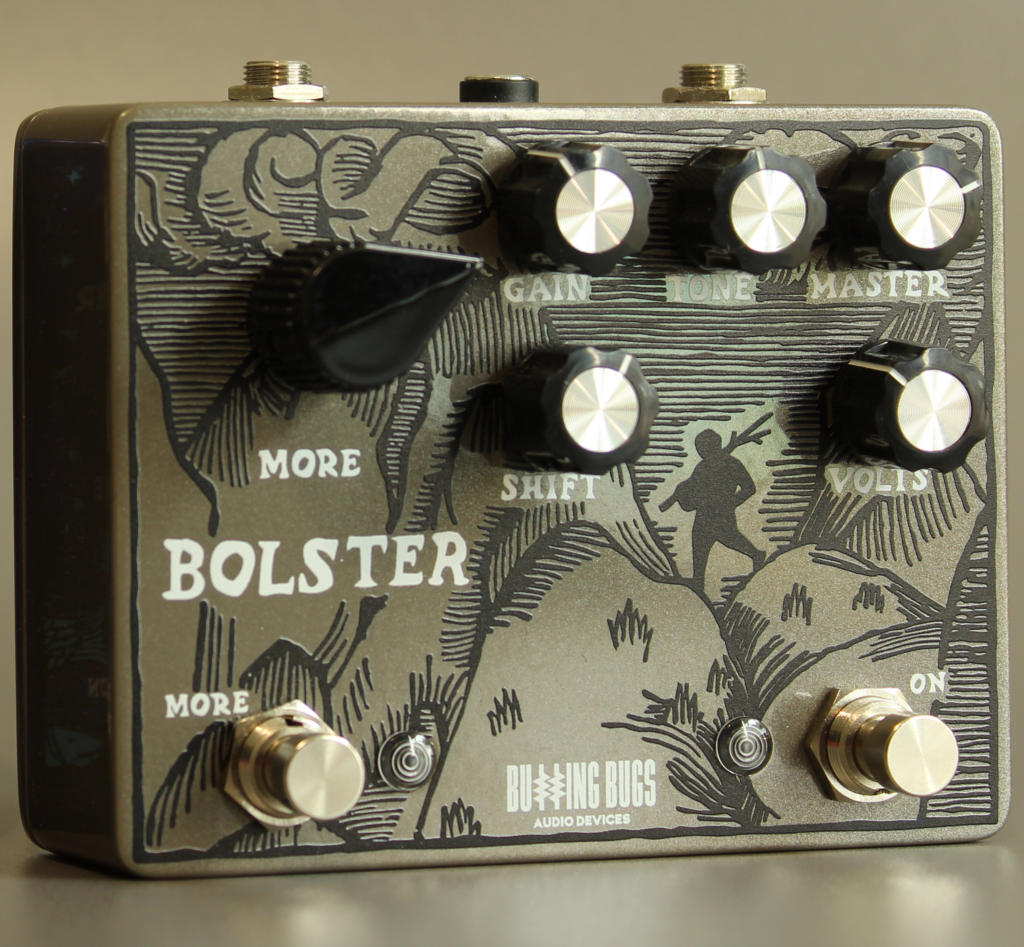
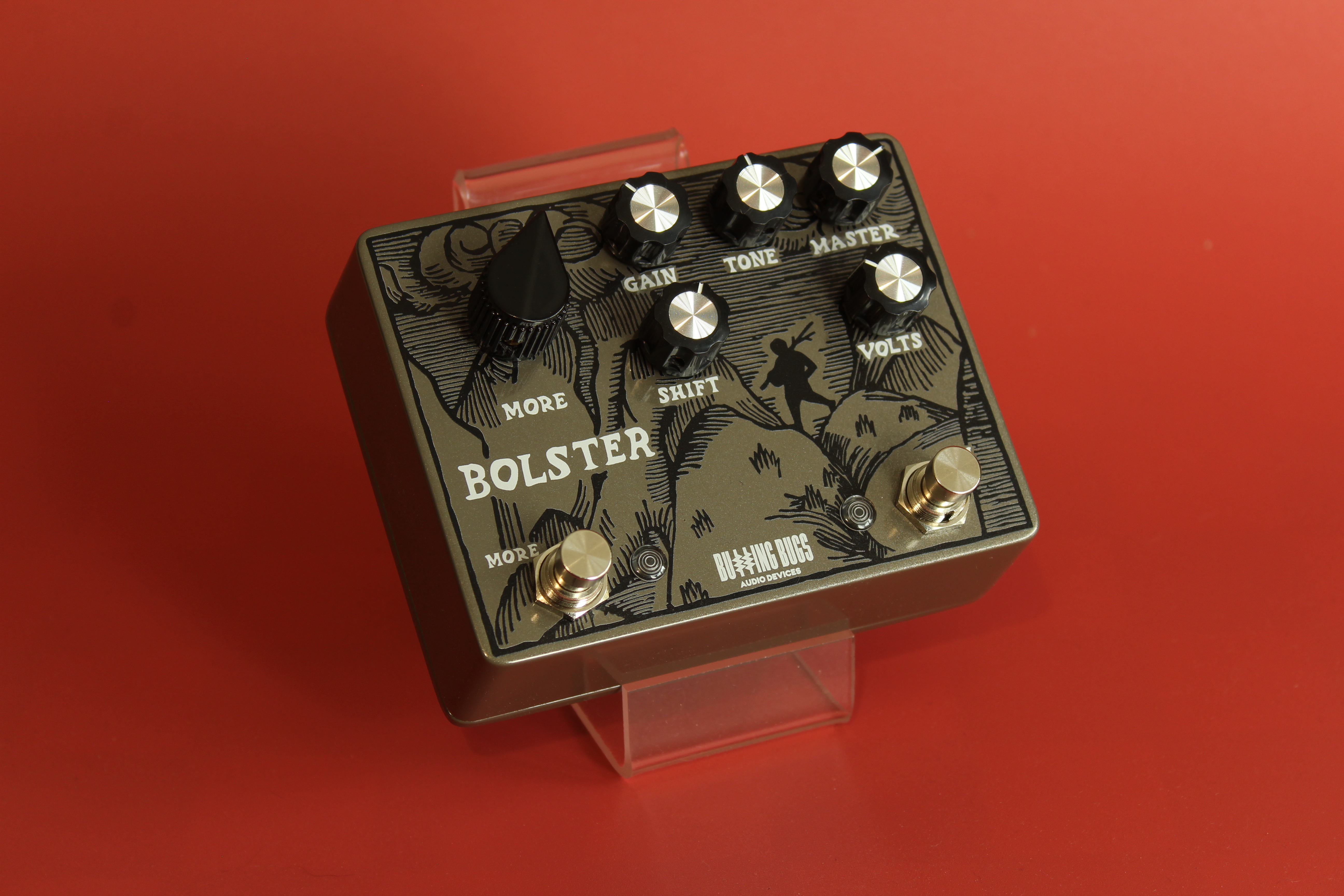
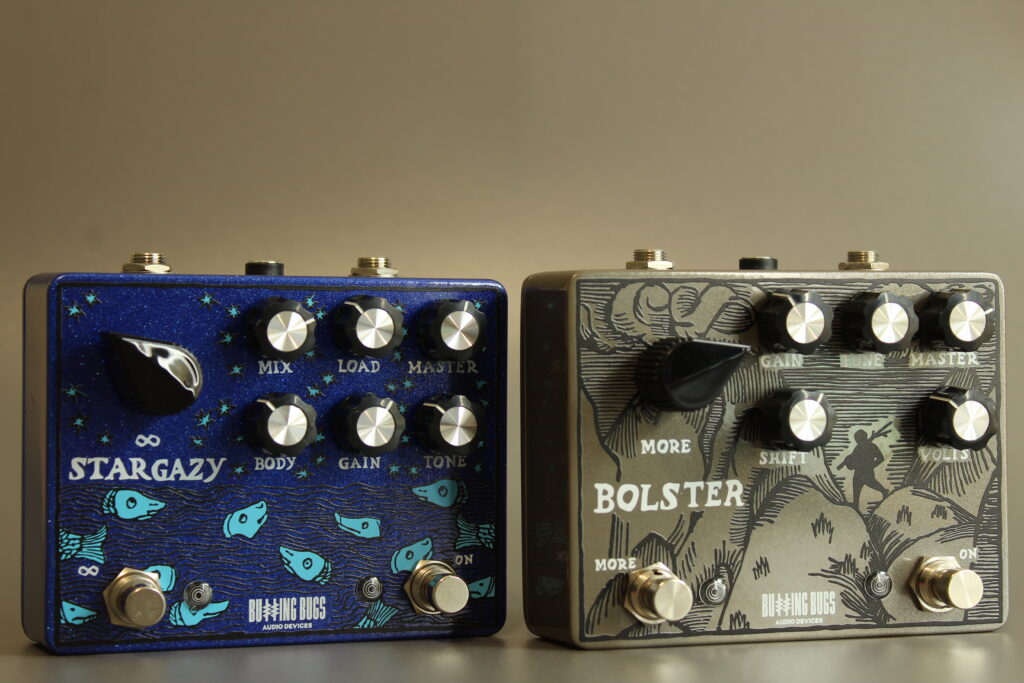
My logo was designed by a graphic designer; I hadn’t met him, but he was a mutual friend. However, when it came to designing the artwork on the first four pedals, I worked with my brother-in-law, who is also a graphic designer. His background is in packaging, so he was very excited to work on something that wasn’t a boring box for toothpaste or whatever. So, it helps to have a graphic designer in the family! I pulled together loads of ideas and examples of other people’s work that I liked, and he came back within a week with the mock-ups for the BBA01 and the BBA02, and they were just perfect, exactly what I was looking for.
My whole ethos when I started designing was that I wanted to make pedals that were good at what they do, simple to use with clear controls that mean what they say and aren’t called dumb things so that you know what you’re doing when you’re turning a knob. He was able to make things that were very simple and clear but also immediately distinguishable as a branded product.
What inspired you to go into pedals?
When I was first getting into pedals, the ZVEX Lo-Fi Junky and the Fairfield Shallow Water were the ones that didn’t sound like other pedals. So, I’ve always respected those two companies, and, once again, they have distinct branding. Fairfield, with the raw enclosures and the stamped boxes, is instantly recognisable, and ZVEX have all of their pedals that are landscape, which is such an incredibly impractical way of doing it, but it is recognisable as them.
In terms of UK builders, a lot of those were quite inspiring. Reeves Electro was one that always stood out to me. Charlie Pedals, this guy in Nottingham, does a lot of the new old stock component fuzzes. With those two, I really liked the look of their stuff because they were immaculate recreations of classic things.
There’s just so many builders doing cool stuff, and a lot of them are at the shows, so it’s really nice to get to know them. Phil of Bleak District Electric: I’ve always liked his stuff, and he has always been helpful when I’ve had questions. Patrick from Intensive Care- he’s got such a distinctive thing going on.
The pedal community seems like a supportive group; what has been your experience?
A lot of it stems from the pedal-building community being such a collaborative thing anyway. There are so many resources online and message boards with people putting up their designs and helping other people out that it’s kind of steeped in collaboration and community, and it always has been. That’s one of the things that kind of drew me to it. I come from a background of playing in DIY punk bands, so the community aspect of it is one of the things that has always appealed to me. If we, as builders, were more business-minded, we would probably be more hostile towards one another, but part of the fun is that we’re all so passionate and interested in the same thing that it almost feels counterproductive to be negative about each other.
I’m new on the block. I released my first pedal 18 months ago. I’ve reached out to other builders for advice and tips, everyone’s been so open and helpful. There are some things about individual practices that you might want to keep close to your chest, but I don’t think anyone’s in this to become super rich. They’re in this because they love what they do.
The whole culture is from people starting out in their bedrooms, playing around with circuits. When you start playing around, you’ll wonder if anyone’s got any advice and you’ll google it, and inevitably, there will be a thread on a DIY pedal message board that has all the information you need.
That’s why there’s so many good, small builders at the moment because the resources are there, and they’re growing. Some of these message board threads go back to 2008/2009. It’s a really, really positive community.
How important are collaborations to Buzzing Bugs?
Los Campesinos are a band that I’ve been a fan of since I was a teenager. I bought their first album when it came out, and through bands, I got to know them a bit. I got quite friendly with them over the past couple of years, so much so that my band has recently done an American tour with them, although I wasn’t drumming on that tour because of family commitments, so we had a dep drummer. We’re all friends now, which is a really odd situation to be in, with a band that you’ve loved for nearly 20 years.
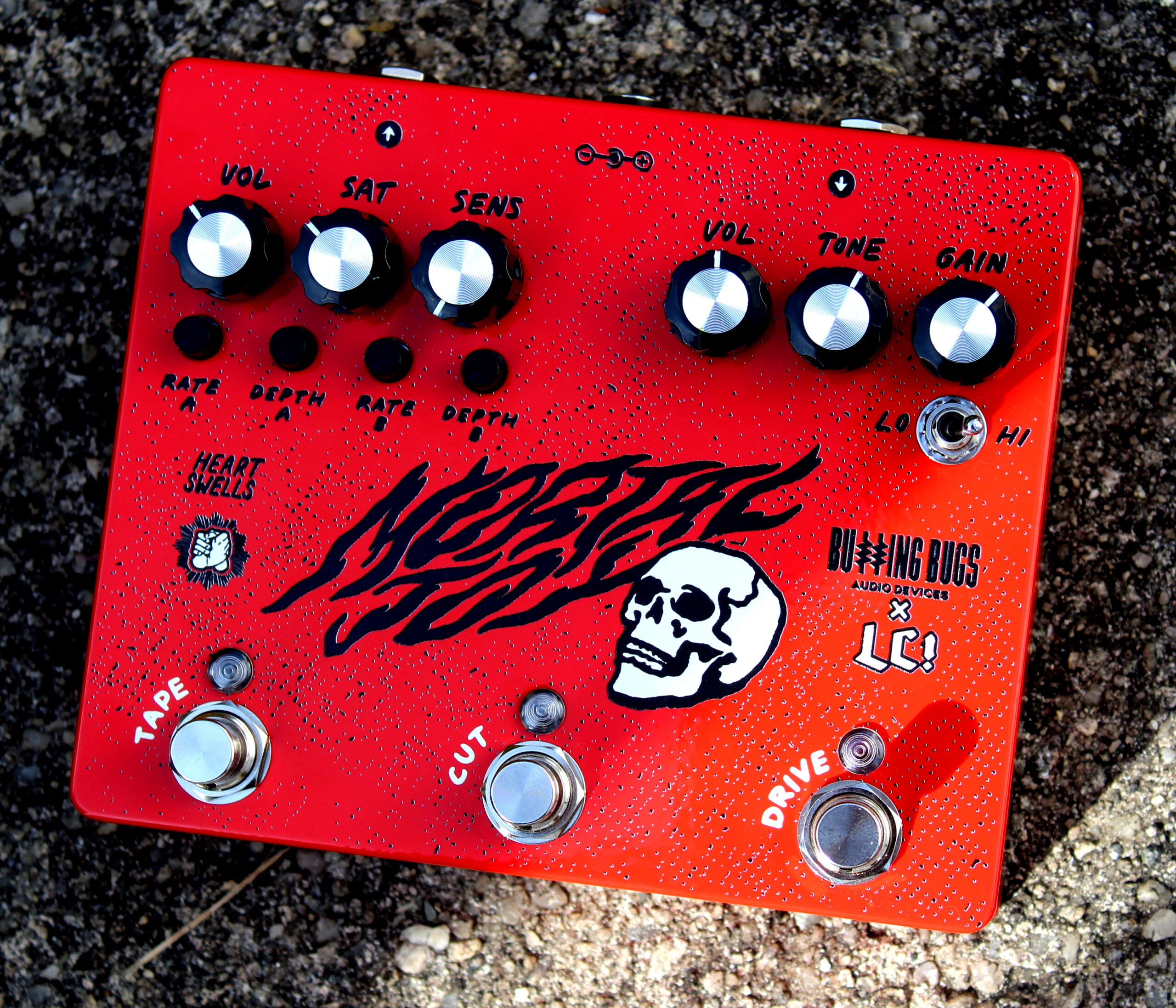
They played a headline show in London, and some friends were there; they were talking about the fact that they had a new album that they’d been working on. I had been contacting bands to talk about collaborations, so I just hit them up, like, “You’re working on a new album; do you want to do a fun bit of merch as a tie-in?” They were absolutely up for it, thinking it sounds like a really, really fun project. When we first started talking about it, my intention, or my expectation, was that the pedal would be a clone of something that they really liked with their branding on, something quite simple, something that we could do a little run of. But the two guitarists got a bit over-eager and started throwing out a lot of suggestions.
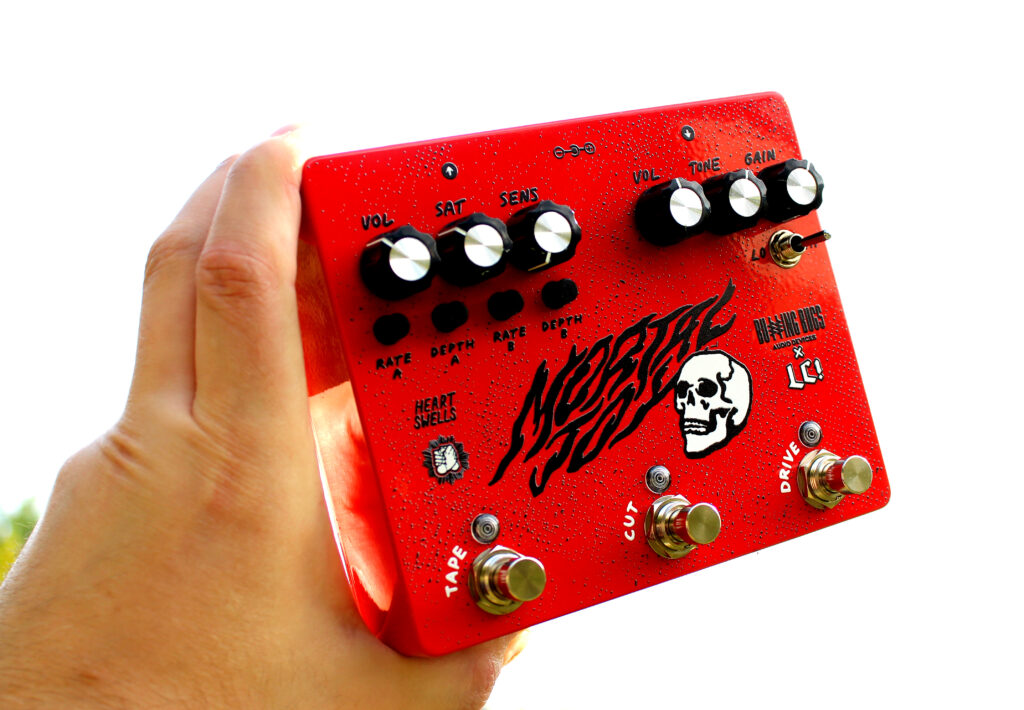
I learned a lot through that project. One of the things is that I should learn to say no more. The pedal makes three different sounds and combines so many different bits of other circuits that it took a long time to get the pedal to the final point. We spoke quite regularly about what they wanted it to do; their idea was that they would have a pedal that could recreate all of the plugin sounds that they used on the album. The three sections are the guitar sounds from the new album, recreated as closely as I can.
We were talking about numbers and how many units they wanted to make. They have quite an intense fan base who basically buy anything that they release, so they asked if we could start with 100 units. I hadn’t sold 100 units of my own product, so that was quite a daunting prospect but an exciting one. It means there’s going to be Buzzing Bugs stuff in the hands of people who don’t necessarily know who we are. Even if I don’t make much money from it, it’s a great marketing exercise.
So, we did the 100 units split over two runs, the red ones and then the silver ones, and there’s one yellow one. I do kind of have it to play with, but I don’t have one of the finished products. It’s been an all-encompassing project that took about four months from start to finish; there were so many revisions and tweaks because they’re perfectionists, and I completely appreciate that.
They didn’t want to release something that they wouldn’t use themselves, which is why they weren’t too interested in doing the more simple clone of something. They do use them when they play; I went to see them in Bristol a couple of weeks ago, and they both had them on their board, so that’s always nice to see.
There is a big element of what you might call bedroom pop in that wobbly Lo-Fi sound, and I think a lot of people lean into that now. The tape section of that pedal is one of my favourite things I’ve done, and in the future, I’ll do a standalone version of it. The Lo-Fi thing is very popular, and my favourite pedal ever is the ZVEX Lo-Fi Junky, which does that sort of wobbly thing perfectly, that was one of their references when we were designing, it takes inspiration from that.