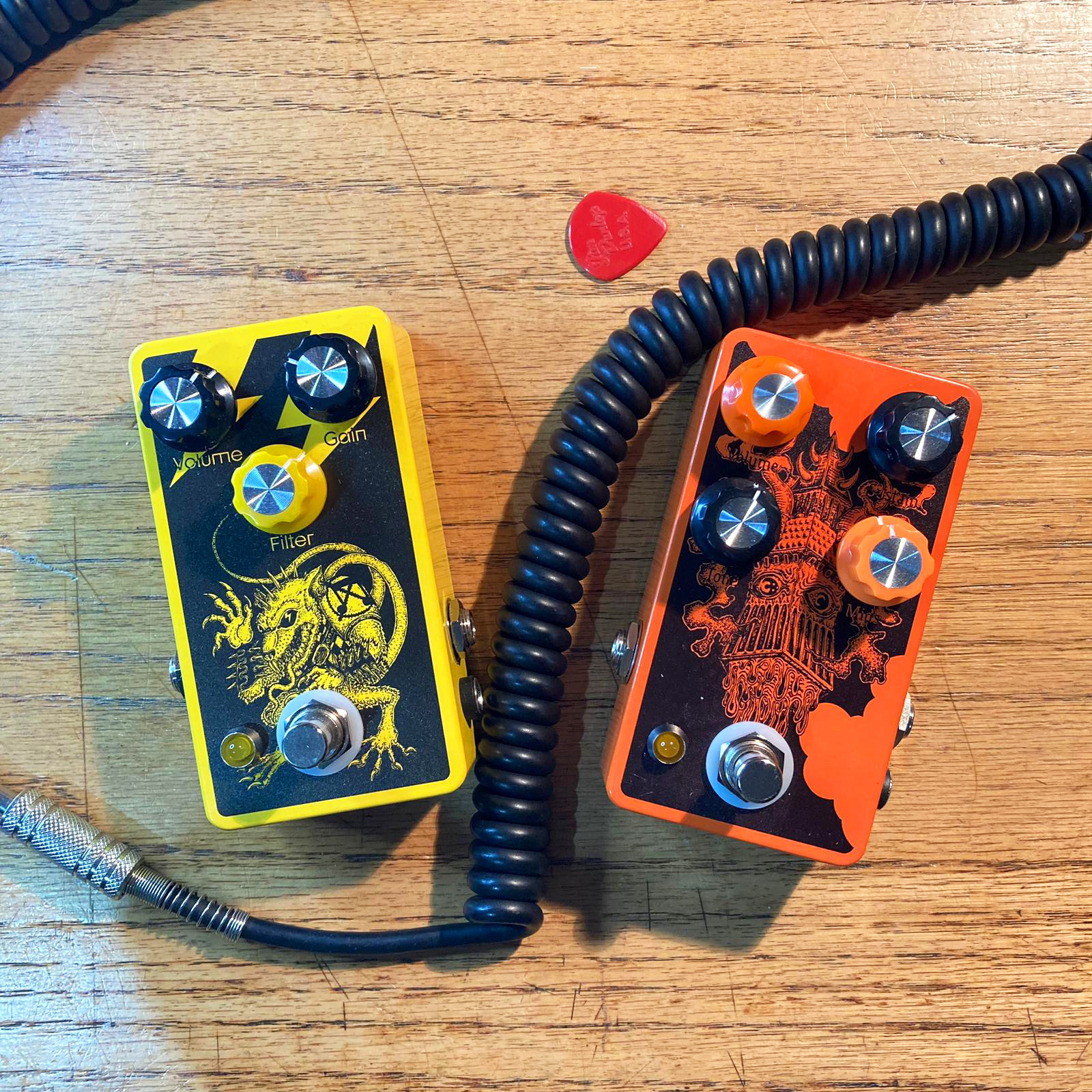
Interview date: 22/10/2024 // @ablpedals // www.ablpedals.com
Tell us about your background.
I’m Angus, and I run ABL pedals from Glasgow.
We’ve got a big music scene up here. It goes back to when there was a port and an art school. You had this big mix of working-class people and artists at the same time, much like Liverpool. In the 80s, there was Deacon Blue and acts like Hue and Cry, who were hugely successful. There was strong reinvestment into the scene; all those bands went on to manage bands or to open studios and places like that. Glasgow became a bit ahead of Edinburgh in the 80s, then, off the back of that success, there was this big boom where it became the cultural hub for Scottish music.
I run a record label. I still do, but it’s parked for a while. Most of the acts are local. The label started as a vehicle for my own band, and I had friends who had stuff on the label too. The sales were all right, but it’s the costs involved, and because of the way we structured ourselves, all the money we made went back into doing more. We were stringent on getting so much before we could go to the next thing. Then, all of a sudden, the costs almost doubled. By the time we were ready to do the next thing, it just became unfeasible. Between that and the admin, it was exhausting.
I also worked as a Venue Booker; It was part-time that ended up being more full-time for a while. Then, I had the great idea to quit and go freelance just as the pandemic was kicking off. I needed something to do, and I wouldn’t have done any, so I created ABL Pedals. ABL is Angus Black Lawson, which is a riff on JHS. It just had a nice ring to it.
What’s the Glasgow pedal scene like?
I ran an event in August. I intentionally kept it small because I didn’t know what the interest would be, but thankfully, it was amazing.
There’s a couple of builders up here, there’s Gojira, Grant from Sine Effects lives just up the road, and Krachwerke. Some have come and gone, and there are people just doing clones. For the repair side, everyone who can do that has either moved on to bigger things, like doing amps, or they have their own thing, that’s why I looked to fill the gap for the repair side.
I’ve been able to experience more pedals through building pedals. We’re all arguably doing the same thing, but we’re all doing the same thing very differently. It’s quite endearing that we can all exist. I’m quite excited to see what other people are doing and just try stuff.
Now, as well, with there being as many small companies, it’s becoming a bit more about what the person likes, what sounds they like, and maybe, in turn, they influence other people.
I now have a group chat with another couple of DIYers and small builders, which, all banter aside, can be pretty helpful when you’re stuck.
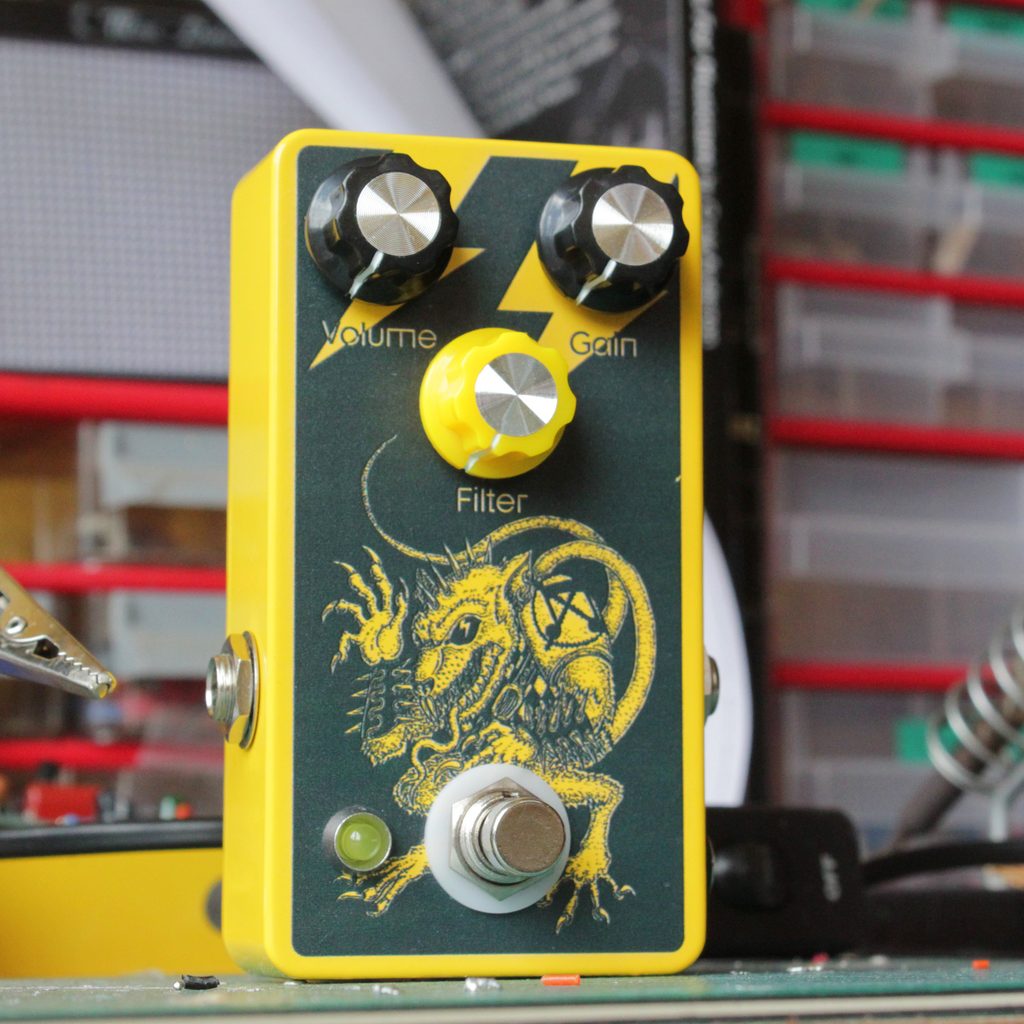
How did ABL begin?
I started to use some of the skills I’d learned at Uni, like setting up a business, and I combined that with what I already knew. I put a survey up on a couple of the local Facebook groups, and without pushing it too hard, it got over 100 replies; I thought, ‘okay, maybe there’s a bit of interest here’, but I set that out very much with the idea of doing repairs and modifications. That gave me time to get the name out there and work out what I wanted to do with the project, whilst getting to know a lot of the local musicians as well.
I aimed to learn while I went; I built some clones that were Simpsons-inspired pedals, which were fun, but I thought, “I can’t do this; these can’t just be what I’m known for”. They did encourage me to go down the route of building my own.
In 2022, I did a charity run of pedals to raise funds for Ukraine, and then I was mostly doing kits. The design was largely based on finer details of how I’d fit the kits together.
When I was starting to learn, a big thing for me was Fuzz Dog, one of the kit companies in the UK. They’ve got all the instructions for all their kits on the website, as well as schematics. You can look up EQD Plumes or Life Pedal, and it’s there. That resource was amazing.
On your early builds, when you inevitably have a problem, you can use the schematic to troubleshoot. This encourages the more methodical approach, which, I guess, in turn, led me to offer repairs. Repairs are a bit of a means to an end, but going down that route, I can diagnose something I’ve built that hasn’t worked, and I’ve fixed it.
As you run ABL yourself, how did you learn the skills to run a business?
I’ve worked too many jobs, I would like this to be a business, and I don’t know if that’s just because I did a business degree. I know the music business side of it, and that’s where I developed my DIY ethos. DIY can be professional, particularly in music, but it has this bad rep, but that’s bullshit. There are people who are doing it on their own terms so well. You don’t wait for the scene to catch up with you; make your own scene and then make people come to that. That’s my ethos.
I still struggle with some business stuff, but I guess I know more about that than some. I know invoicing. I know how to track business expenses versus income, and what can be a business expense. I’m at college right now, and my income is getting supplemented because I’m getting a student loan, so that helped cover my bills, and I’ve quit my job. I don’t have time if I’m doing a full week of college and then doing my own thing. I’m hoping to set myself some goals or work out how to work towards some goals.
ABL has a distinctive brand, how did you develop this?
There’s a lot to be said about how a company presents itself and then how people perceive it. My thing is DIY. I’m in an indie band, and that plays into it, and it plays into the label as well. You look at Holy Island audio, and it’s all about noise; Life is Unfair has that kind of harsh noise stuff and doom. Patrick (Intensive Care Audio) is very much right if you’re an experimental guitarist who makes My Bloody Valentine-influenced music, and his brand is quite suggestive of that.
I’m probably better known for my repairs, and that was done to establish myself on the local scene. Now, I’ve got quite a wide audience, but I don’t know if my pedals necessarily play into all of what they do. I’m consciously trying not to shoehorn myself. The stuff I’ve put out is things I’ve wanted, or occasionally, ideas have been based on conversations with people when they’ve come in to get something repaired, or I’ve met them at a gig and stuff like that. I used to do a bit of custom builds, and that has occasionally sparked something as well.
For my packaging, I include a manual, which is a zine and plays into the DIY thing, which I think is pretty fun, and then it’s got a sticker and a business card. I don’t go over the top; it’s just kind of the pedal wrapped in this stuff to not move. I am quite particular that all the knobs have to be turned down and the pedal has to be bypassed. It’s DIY, but it’s professional.
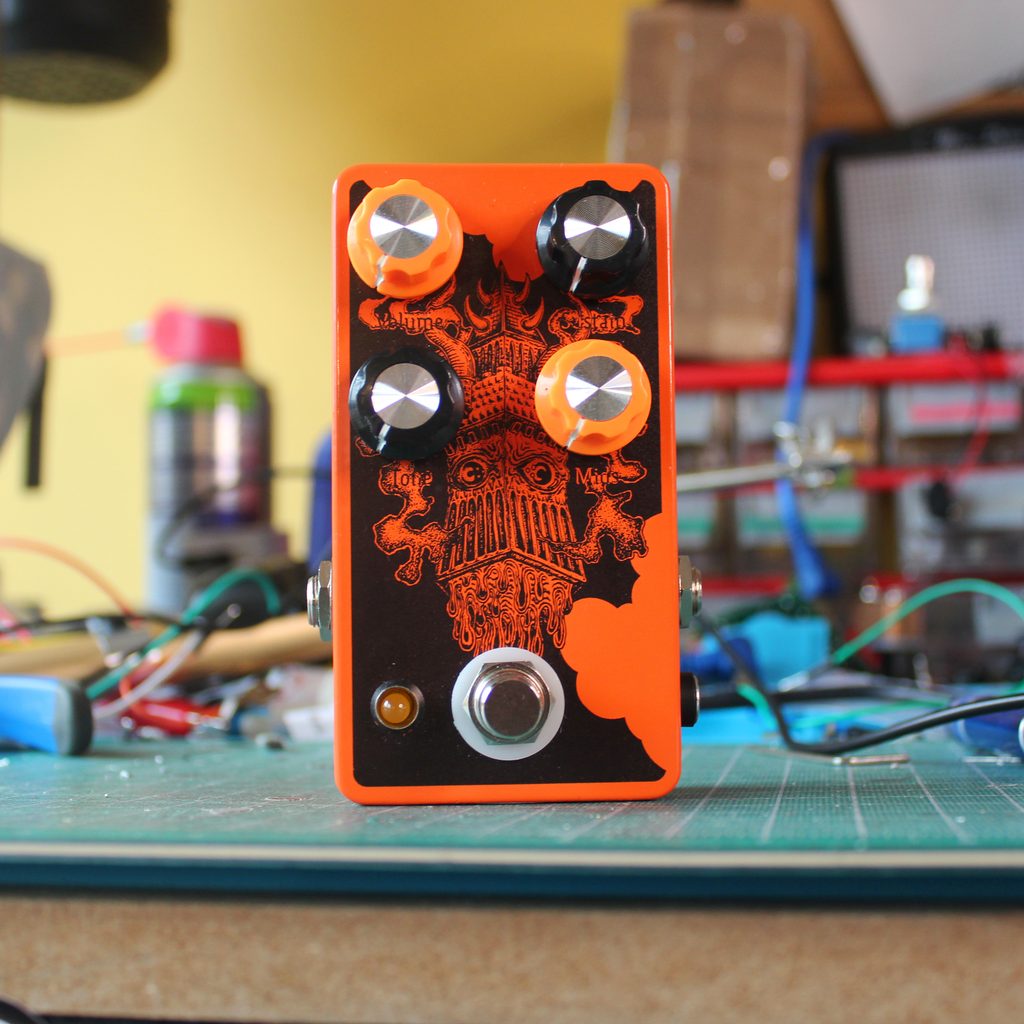
How do you go about testing Prototypes?
I do have a good network of friends up here that I can bounce ideas off. I play in a band with two pedal nerds, and I’ve got other friends who are pedal nerds. I can say, what would you think of this? I can take a prototype, and we can sit down, and they can give me good, honest feedback about it: “I like this. I don’t like this, or I would do this with this.” For the blendable preamp thing I’m doing, a friend said they would need to have the tone way up for this to work how they would use it, and that conversation in our studio made me rethink how to relabel the knobs; it all boils down to how the person uses it. I’m quite lucky that I have a network; it’s not necessarily other builders but other musicians.
What advice do you have for would-be pedal makers?
People are pretty willing to offer advice if you ask them. For the most part, they’ll tell you.
I’m on an electronics course just now, and there are almost 20 of us doing it full-time. Being a bit older, I’ve done quite a lot of learning about myself, so I’m able to apply that to what I do. I’m the only one who can solder, and I’m the only musician on the course. Soldering for guitar players is really still quite gatekept. If you have to replace the input jack, people feel they can’t do that. So, learn how to solder, don’t be afraid to ask questions and just do research – work out what you like and go from there.
It’s about having that initial willingness to learn. Don’t be afraid to reach out, and don’t be intimidated. The online world is all a bit toxic, but the DIY side of it is really encouraging. Being on DIY panels on Reddit and groups on Facebook was very encouraging in the early days.
Where do you plan to take ABL in the Future?
I’m going to try to start factoring into a bit of my branding because there’s no one else doing it here. I don’t want to just be Scotland’s pedals like DOD are America’s pedals. I don’t want to give up the branding and stuff I’ve already got. So, maybe I need to work out that path myself and see how they both come together.
There’s also these two prototypes I have, an overdrive and a boost, and I was going to put them together. Initially, I wasn’t going to do anything with the boost; it was just something I was playing around with, but it’s actually quite fun. So, now I’m considering both of those being my next release. It initially had three knobs, but it doesn’t need that, so now it’s one knob and a toggle. They’re going to be the Baird and the Bell after John Logie Baird and Alexander Bell, to play on Scotland’s industrial heritage.
I am quite up for just trying stuff because, in the end, they can be discontinued. Shit can happen, and you can stop building pedals and just move on to the next thing. Unless they grow arms and legs, they don’t need to have longevity. Earthquaker, quite famously, has stopped some of their most popular pedals, and then they’ve done second versions of them later. If something’s not what it should be, I can just stop it; I have that flexibility.